Bipolar Disorder Statistics 2026: Prevalence, Facts, and What the Numbers Mean
Bipolar disorder statistics can make a complicated mental health topic feel more concrete, but the numbers need careful context. A percentage cannot tell you what a person's mood changes mean, and it cannot replace a professional clinical assessment. Still, prevalence data can show how common bipolar disorder is, where misunderstandings happen, and why early support matters. If you are comparing statistics with your own mood patterns, an educational resource such as a confidential mood screening first step can help you organize what you notice before speaking with a qualified professional.

Key Bipolar Disorder Statistics for 2026
The most useful bipolar disorder statistics in 2026 come from large public health sources and long-running epidemiology studies. They do not all measure the same thing. Some describe past-year prevalence, some lifetime prevalence, and some global estimates based on modeling. That is why two numbers can both be accurate while answering different questions.
Here are the headline facts:
- The World Health Organization's 2026 fact sheet reports that about 36 million people worldwide were living with bipolar disorder in 2023, roughly 0.4% of the global population.
- WHO translates that global prevalence to about 1 in 226 people.
- In the United States, NIMH reports that an estimated 2.8% of adults had bipolar disorder in the past year.
- NIMH also reports that about 4.4% of U.S. adults experience bipolar disorder at some time in their lives.
- U.S. adult past-year prevalence is very similar by sex in NIMH data: 2.9% for males and 2.8% for females.
- Among U.S. adolescents ages 13 to 18, NIMH reports lifetime prevalence of 2.9%.
- NIMH estimates that 82.9% of U.S. adults with past-year bipolar disorder had serious impairment.
- National Comorbidity Survey Replication data estimate lifetime prevalence at 1.0% for bipolar I disorder and 1.1% for bipolar II disorder.
- The same survey estimated 12-month prevalence at 0.6% for bipolar I and 0.8% for bipolar II.
- Bipolar disorder is often discussed through episodes, but population statistics count people, time periods, criteria, impairment, and survey methods.
A quick way to translate the U.S. adult numbers is this: 2.8% is about 1 in 36 adults in a given year, while 4.4% is about 1 in 23 adults across a lifetime. These are estimates, not predictions for any one person.
Prevalence of Bipolar Disorder in the U.S.
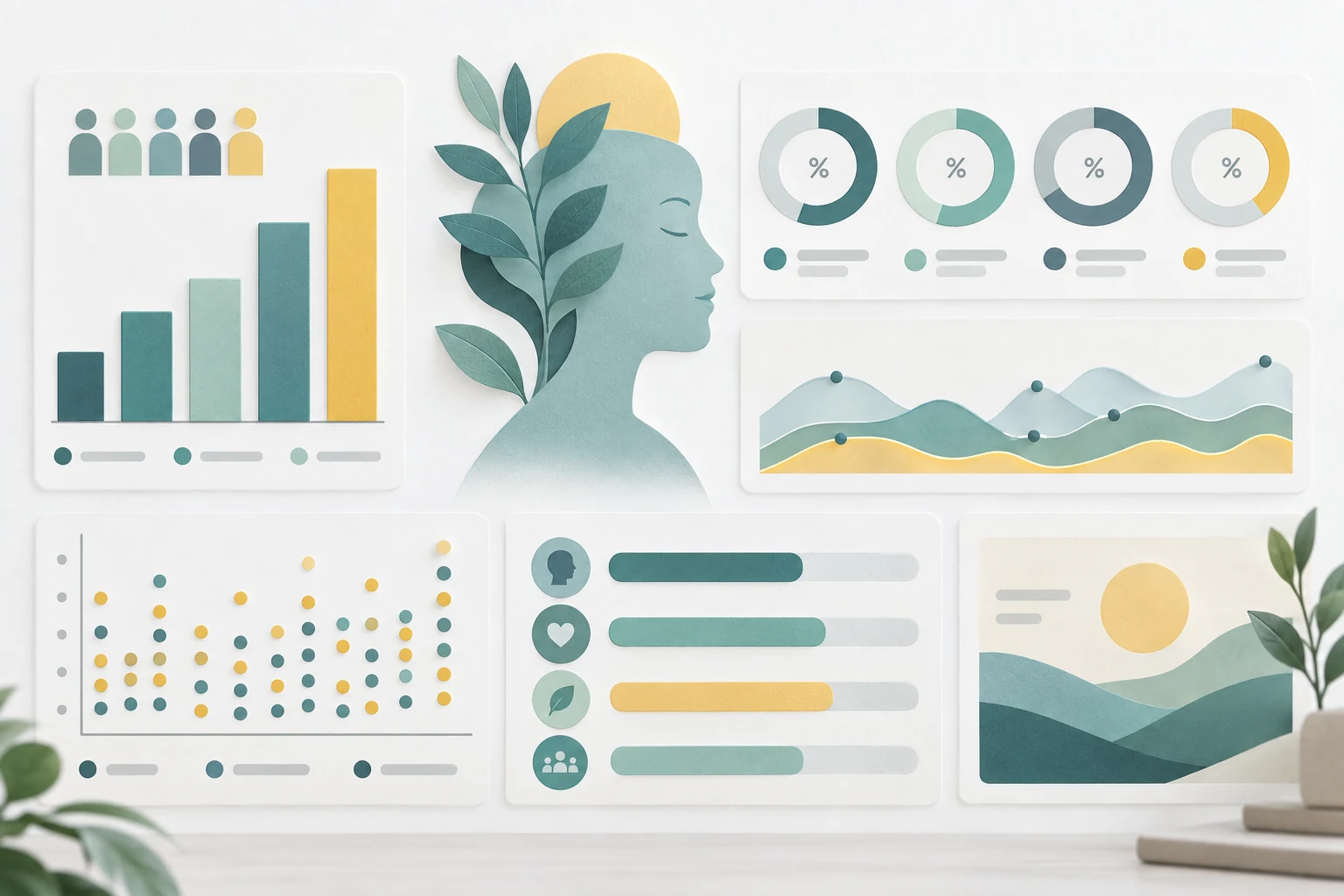
The prevalence of bipolar disorder in the U.S. is usually summarized with NIMH's adult estimates: 2.8% in the past year and 4.4% over a lifetime. These figures come from structured survey data, so they reflect people who met study criteria during the survey framework, not everyone who has ever wondered about mood swings.
The difference between past-year and lifetime prevalence matters. Past-year prevalence asks, in effect, how many adults met criteria during a recent 12-month window. Lifetime prevalence asks whether someone has met criteria at any point in life. Lifetime numbers are usually higher because they include people whose most disruptive episodes happened earlier.
Statistics also depend on the age group being studied. For adolescents, NIMH reports a 2.9% lifetime prevalence among ages 13 to 18, with higher prevalence in older teen groups than in younger teen groups. That pattern does not mean every intense teenage mood shift is bipolar disorder. It means that researchers have found measurable bipolar disorder prevalence in youth samples, especially when symptoms cause serious impairment.
The practical takeaway is measured, not alarming: bipolar disorder is uncommon enough that everyday mood changes should not be over-interpreted, but common enough that persistent patterns deserve respectful attention.
Prevalence of Bipolar 1 and Bipolar 2
Searches for "prevalence of bipolar 1" often mix several ideas together. Bipolar I disorder, bipolar II disorder, cyclothymic patterns, and subthreshold bipolar spectrum presentations are not the same category.
In National Comorbidity Survey Replication findings, lifetime prevalence was estimated at 1.0% for bipolar I disorder and 1.1% for bipolar II disorder. Twelve-month prevalence was estimated at 0.6% for bipolar I and 0.8% for bipolar II. The same analysis also discussed subthreshold bipolar disorder, which helps explain why broader bipolar-spectrum discussions can produce higher numbers than narrower bipolar I-only searches.
Bipolar I involves at least one manic episode. Bipolar II involves hypomanic episodes and depressive episodes, without a manic episode. The distinction is clinically important, but it can be hard for a person to sort out alone because memory, sleep, stress, substance use, and depression can all affect how episodes are described. A bipolar self-reflection tool can organize observations, but a trained professional is needed for formal evaluation and treatment planning.
Men, Women, Age, and Impairment
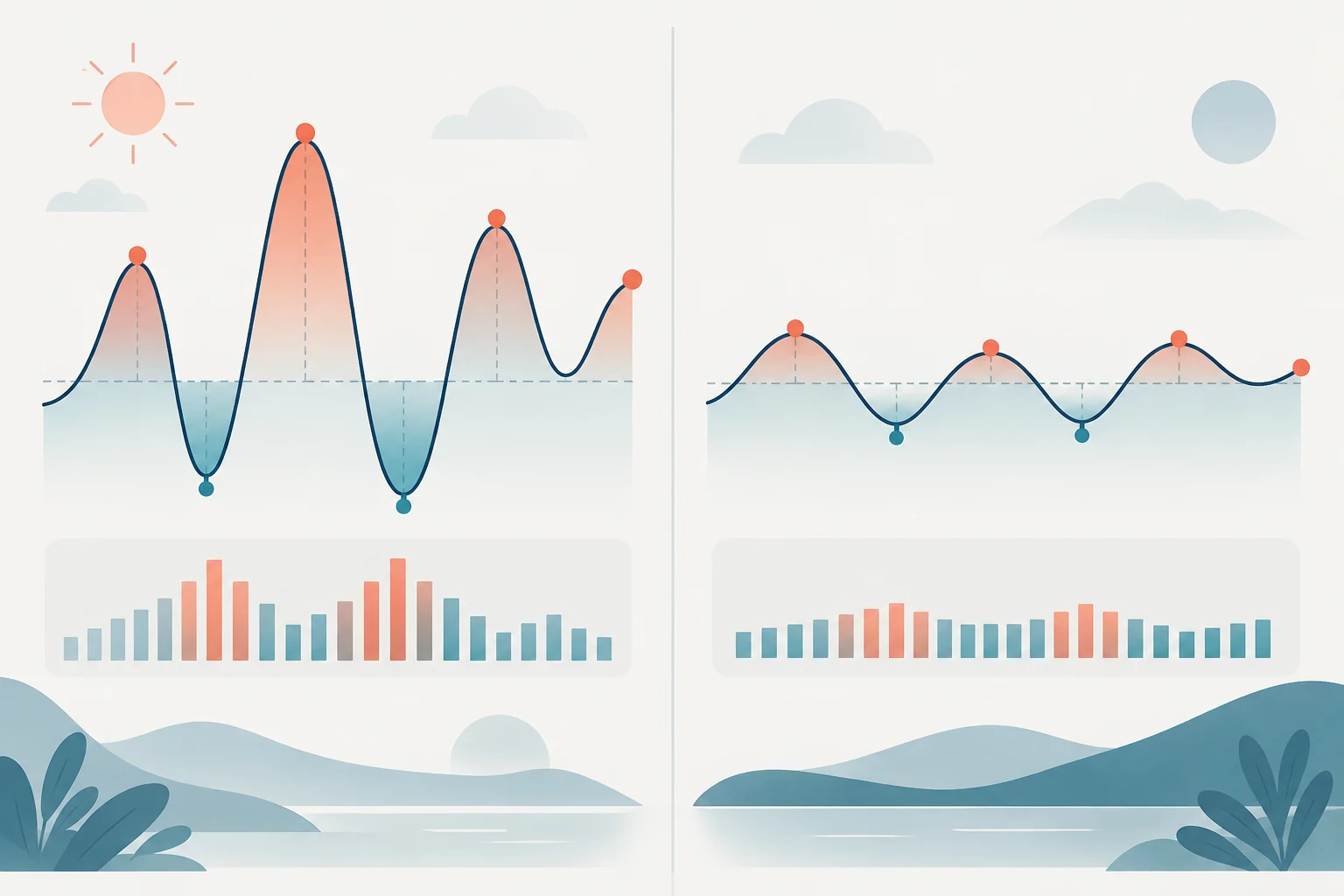
One common search asks about bipolar disorder statistics for men vs women. In NIMH's U.S. adult past-year data, prevalence is nearly identical: 2.9% for males and 2.8% for females. WHO similarly states that prevalence among men and women is approximately equal, while noting that women may be more often identified in available data.
That does not mean experiences are identical. Help-seeking, depression history, postpartum periods, substance use, stigma, access to care, and how people describe symptoms can influence who appears in clinical settings. Statistics can reveal parity in prevalence while lived experience still varies.
Age also shapes interpretation. Bipolar disorder is often observed among working-age people, but it can appear in youth as well. In NIMH adolescent data, lifetime prevalence increases across the teen years, from 1.9% for ages 13 to 14 to 4.3% for ages 17 to 18. Those figures are useful for public health planning, but they should not be used to label normal development or ordinary conflict.
The impairment statistic is one of the most important numbers: NIMH reports serious impairment among 82.9% of adults with past-year bipolar disorder. That figure helps explain why bipolar disorder is treated as a serious mental health condition, not simply a personality style or a synonym for changing moods.
10 Facts About Bipolar Disorder That Make the Numbers Clearer
- Bipolar disorder statistics are not the same as personal screening results. They describe groups, not individual certainty.
- "1 in how many people have bipolar disorder?" depends on the statistic: globally about 1 in 226, in U.S. adult past-year data about 1 in 36, and in U.S. adult lifetime data about 1 in 23.
- Bipolar I and bipolar II have different episode patterns, so prevalence numbers should not be blended without context.
- Past-year prevalence is usually lower than lifetime prevalence because it uses a shorter time window.
- Men and women appear to have similar overall prevalence, even if identification and care pathways differ.
- Serious impairment is common in research samples, which is why support and treatment access matter.
- Depressive episodes can be part of bipolar disorder, and they may look like low mood, loss of interest, fatigue, sleep changes, slowed thinking, or hopelessness.
- Common episode triggers can include sleep disruption, high stress, substance use, major life changes, and irregular routines, though triggers vary by person.
- Many people with bipolar disorder live meaningful, stable, productive lives with the right mix of care, support, routines, and self-understanding.
- The condition may seem "more common now" partly because public awareness, screening, language, and access to information have changed; that does not prove that every mood concern is bipolar disorder.
These facts are more useful than a long list of disconnected statistics because they show how numbers should be read. The goal is not to memorize every percentage. The goal is to understand what kind of question each number answers.
What the Statistics Cannot Tell You
Statistics cannot tell whether one person's late nights, bursts of energy, irritability, or low periods are caused by bipolar disorder. They cannot separate bipolar disorder from anxiety, ADHD, trauma responses, substance effects, grief, medical conditions, or ordinary stress. They also cannot show what support would fit a person's life.
This is especially important for people searching "am I bipolar" after reading a list of symptoms. A high-prevalence number can make a concern feel more urgent, while a low-prevalence number can make someone dismiss a pattern that is genuinely disruptive. Both reactions can be misleading.
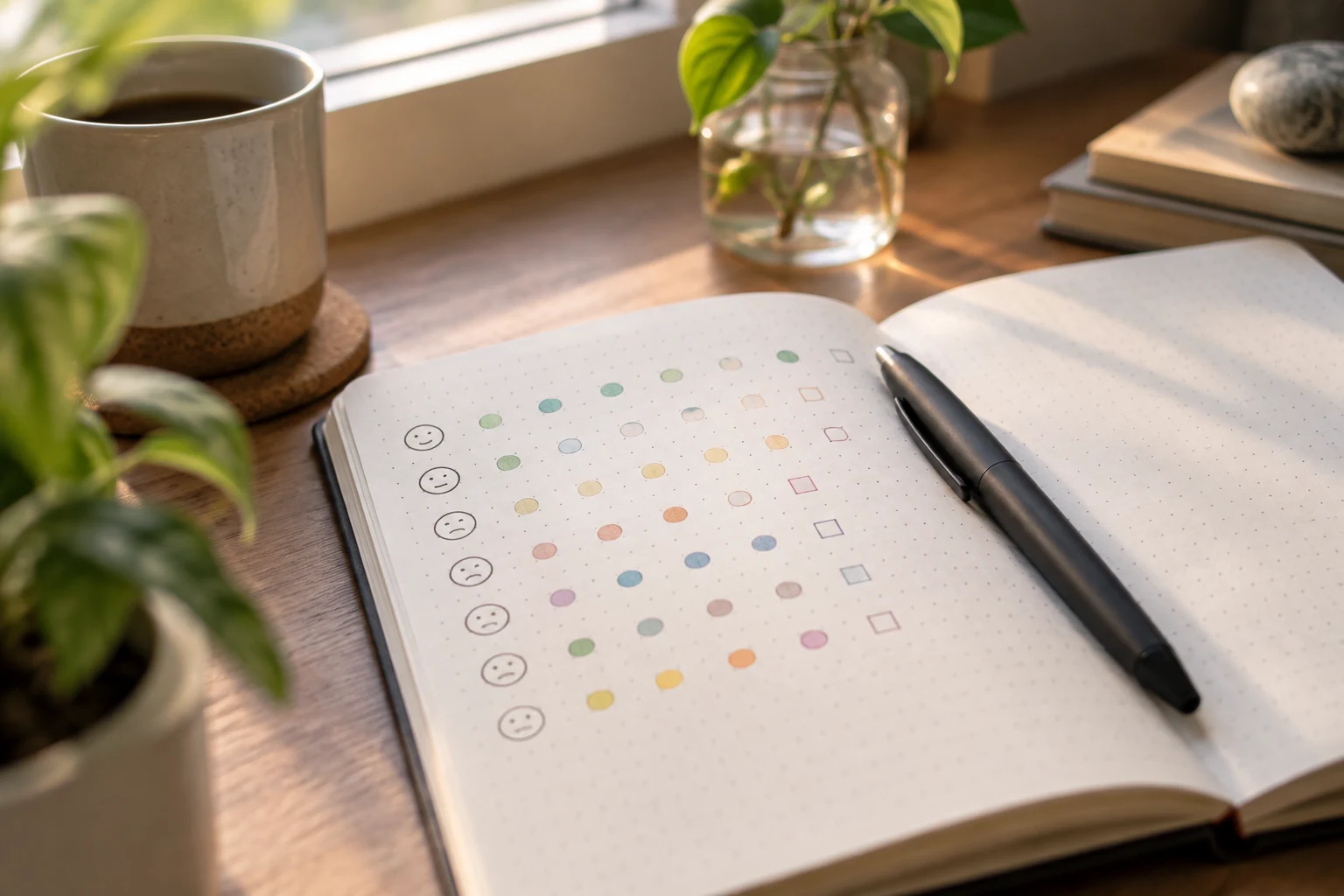
A safer approach is to track patterns: sleep, energy, spending, speech, impulsivity, irritability, depressive symptoms, duration, consequences, and whether other people notice changes. Bring those observations to a qualified clinician if the pattern is intense, recurring, risky, or interfering with work, school, relationships, or safety.
Using Bipolar Disorder Statistics as a Next Step
Bipolar disorder statistics are most helpful when they reduce stigma and improve preparation. They show that bipolar disorder is real, studied, and experienced by millions of people, but they also remind us that careful evaluation matters.
If the numbers made you curious about your own mood patterns, keep the next step low-pressure. You might review your sleep and energy patterns over time, write down examples of unusually high or low periods, ask a trusted person what they have noticed, or explore an educational bipolar screening resource as one way to organize your thoughts. If symptoms feel severe, risky, or hard to manage, contact a licensed mental health professional or local emergency support.
The healthiest use of bipolar disorder statistics is not self-labeling. It is context: knowing that the condition affects a meaningful minority of people, knowing that treatment and support can help, and knowing that your own story deserves more than a percentage.
FAQ
What are the most important bipolar disorder statistics for 2026?
The key 2026 reference points are WHO's estimate of about 36 million people worldwide living with bipolar disorder and NIMH's U.S. estimates of 2.8% past-year prevalence and 4.4% lifetime prevalence among adults. For bipolar I and bipolar II specifically, National Comorbidity Survey Replication data estimate lifetime prevalence at 1.0% and 1.1%, respectively.
What is the prevalence of bipolar disorder in the U.S.?
NIMH reports that an estimated 2.8% of U.S. adults had bipolar disorder in the past year and 4.4% experience it at some time in life. Among U.S. adolescents ages 13 to 18, NIMH reports 2.9% lifetime prevalence.
Is bipolar disorder more common in men or women?
Overall prevalence appears similar. NIMH reports U.S. adult past-year prevalence of 2.9% for males and 2.8% for females. WHO also describes prevalence among men and women as approximately equal, though available data may identify women more often in some settings.
What are some common triggers for bipolar episodes?
Triggers vary, but commonly discussed contributors include sleep loss, major stress, substance use, major life changes, irregular routines, and stopping medication without medical guidance. A trigger does not prove that bipolar disorder is present; it is one part of a broader pattern.
What does a depressive episode look like in bipolar disorder?
A depressive episode may involve persistent low mood, loss of interest, fatigue, sleep or appetite changes, slowed thinking, guilt, hopelessness, and difficulty functioning. In bipolar disorder, depressive episodes occur within a larger pattern that also includes manic or hypomanic episodes.
Do people with bipolar disorder live normal lives?
Many people with bipolar disorder build stable, meaningful lives, especially with appropriate care, support, routines, and attention to early warning signs. The statistics show that impairment can be serious, but they do not define a person's future.