Bipolar Disorder vs Borderline Personality: Key Differences, Overlap, and Next Steps
When people search for bipolar disorder vs borderline personality, they are usually trying to make sense of intense mood changes without jumping to a scary conclusion. Both conditions can involve emotional pain, impulsive choices, relationship strain, and periods that feel unlike your usual self. The key difference is the pattern: bipolar disorder is usually organized around mood episodes, while borderline personality disorder, often shortened to BPD, is more closely tied to emotion regulation, self-image, and relationship stress. If you are sorting through your own patterns, an MDQ-based mood screening first step can help you reflect, but it cannot replace a professional evaluation.
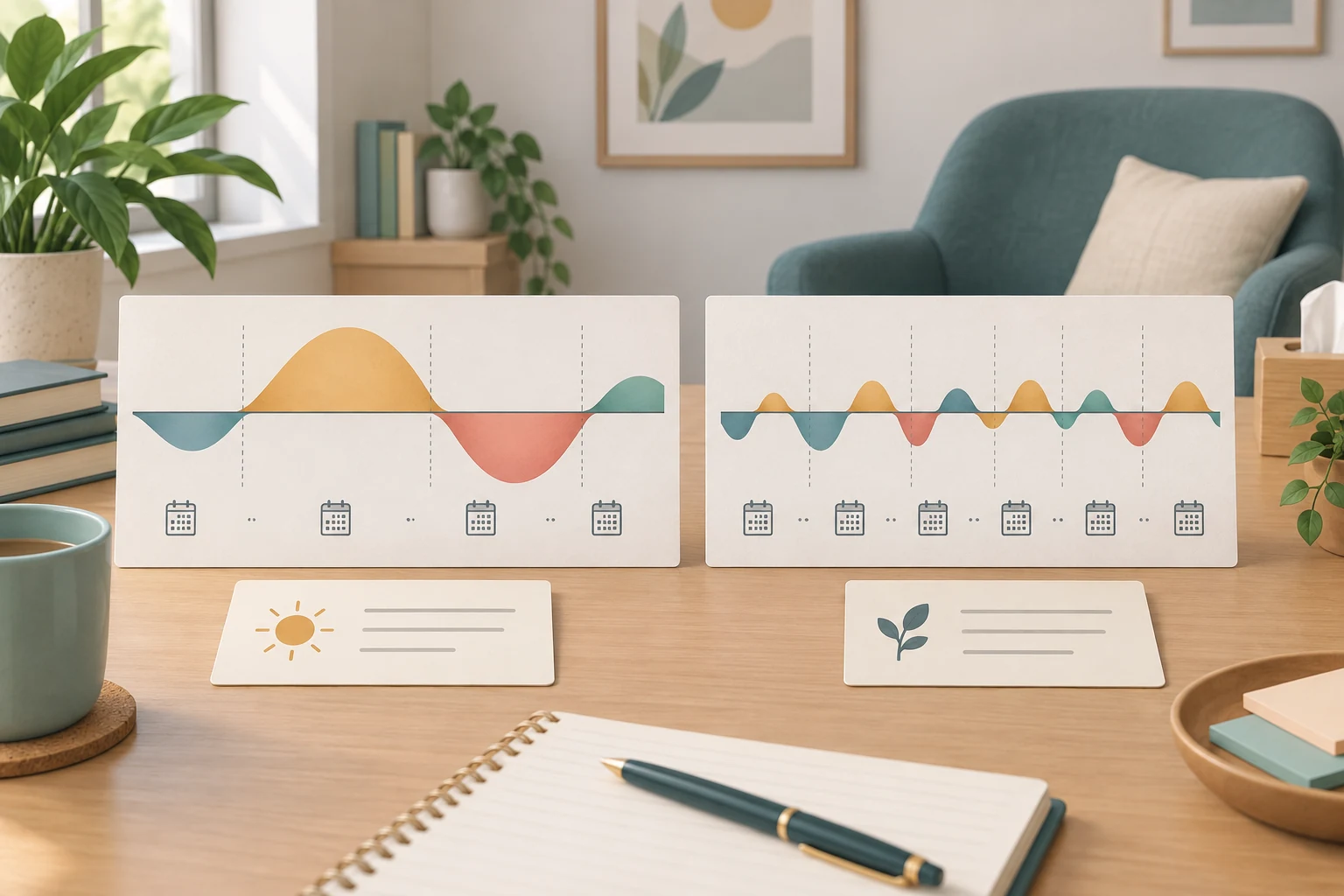
The Fastest Way to Separate the Patterns
A simple comparison can make the overlap less confusing. Bipolar disorder is a mood disorder. BPD is a personality disorder. That distinction does not mean one is more real, more serious, or more deserving of care. It means clinicians look for different patterns over time.
| Question | Bipolar disorder | Borderline personality disorder |
|---|---|---|
| Usual mood pattern | Distinct episodes of mania, hypomania, depression, or mixed features | Rapid emotional shifts, often tied to stress, conflict, rejection, or fear of abandonment |
| Duration | Often days to weeks, sometimes longer | Often minutes to hours, sometimes a few days |
| Between intense periods | Mood may return closer to baseline between episodes | Emotional sensitivity and relationship instability may remain more ongoing |
| Common focus | Sleep, energy, activity level, speech, risk-taking, depression | Emotion regulation, self-image, impulsivity, interpersonal fear, anger, emptiness |
| Treatment emphasis | Medication and psychotherapy are often combined | Structured psychotherapy is central; medication may target specific symptoms or co-occurring concerns |
This chart is not a self-labeling tool. It is a way to organize observations before talking with a clinician. The most useful question is not "Which label sounds like me today?" It is "What pattern shows up across weeks, months, relationships, sleep, energy, and behavior?"
Why Bipolar Disorder and BPD Are So Often Confused
Bipolar disorder and BPD can both include mood swings, impulsive behavior, anger, shame, sleep disruption, and periods of feeling out of control. The overlap is real, which is why a quick online quiz or a single bad week cannot settle the question.
The confusion often begins with the phrase "mood swings." In bipolar disorder, mood changes are usually part of a broader episode that also changes energy, sleep need, activity, speed of thought, confidence, and functioning. A manic or hypomanic period may look like needing much less sleep, talking more quickly, taking unusual risks, feeling unusually powerful or driven, or acting far outside your normal pattern. Depressive periods can bring low energy, hopelessness, slowed thinking, loss of interest, and major difficulty functioning.
In BPD, the mood shift may be more reactive. A message not answered, a tense conversation, a perceived rejection, or a sudden fear of being left can trigger intense emotional pain. The emotional wave may rise quickly and feel overwhelming, even if it later changes again. BPD can also involve unstable self-image, chronic emptiness, intense relationship swings, and efforts to avoid abandonment.
The practical clue is context plus duration. A person with bipolar disorder may have a week where sleep, energy, and behavior shift dramatically even without an obvious interpersonal trigger. A person with BPD may have intense emotional changes that repeatedly flare around closeness, conflict, trust, rejection, or identity. Many people have pieces of both patterns, and some people truly have both conditions.
Bipolar I, Bipolar II, and BPD Are Not the Same Question
Searches like borderline personality disorder vs bipolar 1 and BPD vs bipolar 2 point to an important issue: "bipolar" is not one single presentation.
Bipolar I involves manic episodes. Mania is not simply feeling productive or having a strong mood. It is a sustained state that can include very high or irritable mood, increased activity, decreased need for sleep, racing thoughts, pressured speech, grandiosity, and risky behavior. It can seriously disrupt work, relationships, finances, or safety.
Bipolar II involves hypomanic episodes and depressive episodes. Hypomania is less severe than mania, but it can still be noticeable to others and may be followed by depression. This is one reason bipolar II is sometimes missed: the person may seek help during depression, while the elevated or energized periods feel useful, normal, or easy to overlook.
BPD is different from both. It is not "mini bipolar" and it is not the same as having frequent mood changes. BPD centers on long-standing patterns in emotion regulation, relationships, self-image, and impulsive coping. Someone may feel calm in the morning, devastated after a relational trigger, angry by afternoon, and ashamed by evening. That pattern can be exhausting, but it is not the same as a bipolar mood episode.
If you are using a confidential bipolar screening tool, treat the result as one organized reflection point. It can help you notice bipolar-related indicators, especially around mood episodes, but BPD, trauma, ADHD, anxiety, depression, substance use, sleep deprivation, and medical conditions can all complicate the picture.

Can You Have BPD and Bipolar Together?
Yes, bipolar disorder and BPD can occur together. When that happens, the picture may feel especially confusing because episodic mood changes and rapid interpersonal reactivity can overlap.
For example, a person might have depressive episodes that last weeks, plus intense emotional reactions during relationship conflict. Another person might have hypomanic periods with reduced sleep and high energy, while also struggling with fear of abandonment and impulsive coping during stress. The presence of one pattern does not automatically rule out the other.
This is also why the phrase "which is worse, bipolar or BPD" is not very helpful. Severity depends on the person, the symptoms, safety risks, co-occurring conditions, support, treatment access, and daily functioning. One person with bipolar disorder may be stable for long periods with care; another may have repeated severe episodes. One person with BPD may improve greatly with structured therapy; another may need more intensive support. The better question is: "What care plan fits the pattern and risks I am actually experiencing?"
What to Track Before a Professional Evaluation
If you are wondering whether it is BPD or bipolar, tracking patterns is often more useful than trying to decide from memory. Memory tends to compress emotional time. A week of poor sleep can blur together; a painful argument can make the whole month feel unstable.
Use a simple log for two to six weeks if it is safe to wait. Track:
- Sleep length and whether you felt rested.
- Energy level compared with your usual baseline.
- Mood intensity and how long it lasted.
- Triggers, especially interpersonal conflict, rejection, stress, or major life changes.
- Activity level, spending, driving, substance use, sexual risk, or other impulsive behavior.
- Speech speed, racing thoughts, distractibility, and confidence changes.
- Depressive symptoms such as low motivation, hopelessness, withdrawal, or loss of interest.
- Relationship patterns, including fear of abandonment, sudden shifts in trust, or feeling empty after conflict.
Bring the log to a mental health professional. If you use an online screening result, bring that too, but frame it as supporting context rather than proof. Good evaluation usually looks at symptom duration, severity, family history, medical factors, substance use, trauma history, medications, and how functioning changes over time.
Bipolar vs BPD vs Schizophrenia: When Psychosis Enters the Search
Some searches include borderline personality disorder vs bipolar vs schizophrenia because people worry when they experience paranoia, unusual perceptions, or feeling detached from reality. These experiences deserve careful attention, but they do not all point to the same explanation.
In bipolar disorder, psychotic symptoms can occur during severe manic or depressive episodes and often match the mood state. In BPD, brief stress-related paranoia or dissociation can happen, especially during intense interpersonal stress. Schizophrenia spectrum disorders involve a different pattern, often including persistent hallucinations, delusions, disorganized thinking, negative symptoms, or functional decline outside mood episodes.
This is one area where self-sorting is especially limited. If reality testing feels impaired, if you are hearing or seeing things others do not, if you feel unsafe, or if others are worried about your behavior, seek professional or emergency support promptly. The goal is not to scare you; it is to make sure the right level of care is involved.

A Gentle Next Step for Sorting the Pattern
The most useful next step is a layered one: reflect, track, and ask for help that matches the level of concern. If your main question is bipolar disorder vs borderline personality, start by separating episode clues from reaction clues.
Episode clues include a sustained change in sleep need, energy, speech, activity, confidence, risk-taking, and depression that lasts days or weeks. Reaction clues include intense emotional waves that rise quickly around rejection, conflict, closeness, identity pain, or fear of abandonment. Overlap clues include impulsivity, anger, shame, substance use, and relationship strain that can appear in either condition.
For a low-pressure starting point, you can review your mood pattern with a structured screener and use the result as a conversation aid. If your symptoms are intense, escalating, connected to self-harm thoughts, or disrupting work, school, relationships, sleep, or safety, involve a qualified professional sooner rather than later. You do not need to solve the label alone before asking for support.
FAQ
How do I know if I am bipolar or borderline?
Look for pattern, duration, and context. Bipolar disorder usually involves distinct mood episodes with changes in sleep, energy, activity, and functioning. BPD often involves fast, intense emotional reactions connected to relationships, rejection, identity, or abandonment fears. Only a qualified professional can evaluate the full pattern, but a symptom log can make that conversation much clearer.
Can BPD be mistaken for bipolar disorder?
Yes. Both can involve mood swings, impulsivity, anger, depression, and relationship stress. The mistake often happens when all mood changes are treated as the same. Duration matters: bipolar mood episodes usually last longer and include broader energy and activity changes, while BPD shifts are often more reactive and interpersonal.
Is BPD the same as bipolar disorder?
No. BPD and bipolar disorder are separate conditions with different core patterns and treatment needs. BPD is centered on emotion regulation, relationships, self-image, and impulsive coping. Bipolar disorder is centered on mood episodes such as mania, hypomania, depression, or mixed features.
Can you have BPD and bipolar disorder together?
Yes. Some people experience both. In that case, care planning may need to address both episodic mood changes and ongoing emotion regulation or relationship patterns. This is one reason a careful professional evaluation is important when symptoms are complex.
Which is worse, bipolar or BPD?
Neither condition is automatically worse. Both can be serious, and both can improve with the right support. Severity depends on symptom intensity, safety risks, co-occurring conditions, functioning, treatment access, and personal history.
What do people with BPD feel on a daily basis?
Experiences vary, but many people describe intense emotions, fear of rejection or abandonment, unstable trust, shame, anger, emptiness, or rapid shifts in how they see themselves and others. These feelings are not character flaws. They are patterns that can be addressed with skilled support, especially structured psychotherapy.