CBT for Bipolar Disorder: Techniques, Worksheets, and What to Expect
CBT for bipolar disorder is usually discussed as an add-on support, not a replacement for medication, crisis care, or a professional evaluation. At its best, cognitive behavioral therapy helps people notice mood patterns, challenge unhelpful thoughts, protect sleep, reduce stress, and make practical plans for early warning signs. If you are still trying to understand whether your mood shifts may need more attention, an online bipolar screening tool can be one private starting point for reflection before you speak with a clinician.

What CBT Can and Cannot Do for Bipolar Disorder
Cognitive behavioral therapy is a structured form of talk therapy that looks at the links between thoughts, emotions, behaviors, routines, and physical signals. For bipolar disorder, it is often used to support day-to-day management between episodes and during bipolar depression. It can help a person become more aware of patterns such as less sleep, rising irritability, withdrawal, racing plans, guilt after a mood episode, or stress that keeps building without a plan.
What CBT cannot do is just as important. It is not a stand-alone answer for bipolar disorder, and it should not be treated as a substitute for prescribed medication or psychiatric care. During acute mania, severe depression, psychosis, suicidal thoughts, or unsafe impulsive behavior, the priority is timely professional or emergency support. CBT skills can be useful later, but they are not enough when safety or reality testing is at risk.
Research and clinical guidance commonly place CBT among psychosocial approaches that may help with relapse prevention, depressive symptoms, functioning, treatment adherence, and co-occurring anxiety or substance use concerns. The careful wording matters: CBT may help, especially when combined with a broader care plan, but response varies by person, episode history, current symptoms, therapist training, and support at home.
How CBT Fits Alongside Medication and Professional Care
For many people with bipolar disorder, the main care plan includes medication management, psychotherapy, routine monitoring, and support from trusted people. CBT fits into that plan by turning broad goals into repeatable skills. A therapist may help you map mood triggers, track sleep and energy, review thoughts that intensify depression, and build a plan for what to do when early warning signs appear.
A CBT treatment plan for bipolar disorder often begins with psychoeducation. That means learning how bipolar mood episodes tend to work, why sleep and routine matter, how stress can interact with mood, and why staying connected to care is important even when symptoms feel quieter. From there, sessions may move into practical experiments: testing a more balanced thought, scheduling a small meaningful activity, setting a wind-down routine, or preparing a written plan for risky situations.
This is also where mood pattern self-reflection can support the conversation. A screening result or personal mood notes cannot replace a clinician's assessment, but they can help you describe what you have noticed: timing, sleep changes, intensity, duration, and impact on work, school, relationships, or spending.
CBT Techniques for Bipolar Depression, Warning Signs, and Routines
CBT for bipolar depression often focuses on thoughts and behaviors that keep low mood in place. Someone may learn to notice all-or-nothing thoughts such as "I ruined everything" or "I will never be stable." The goal is not forced positive thinking. A better goal is balanced thinking: identifying evidence, naming the emotion, and choosing one next action that is realistic for the current energy level.
Behavioral activation is another common CBT technique. During depression, waiting to feel motivated can keep life painfully small. A therapist may help you schedule low-pressure activities that match your capacity, such as a short walk, one meal, one message to a supportive person, or a basic household task. The point is not productivity for its own sake. It is to rebuild contact with routine, pleasure, responsibility, and support in small steps.
For manic or hypomanic warning signs, CBT often shifts toward early identification and response planning. Examples include noticing reduced need for sleep, faster speech, sudden confidence spikes, unusually high spending urges, increased conflict, or taking on many projects at once. A plan might include contacting a clinician, protecting sleep, delaying major decisions, reducing stimulation, asking a trusted person to help monitor risk, or using a prewritten spending plan.
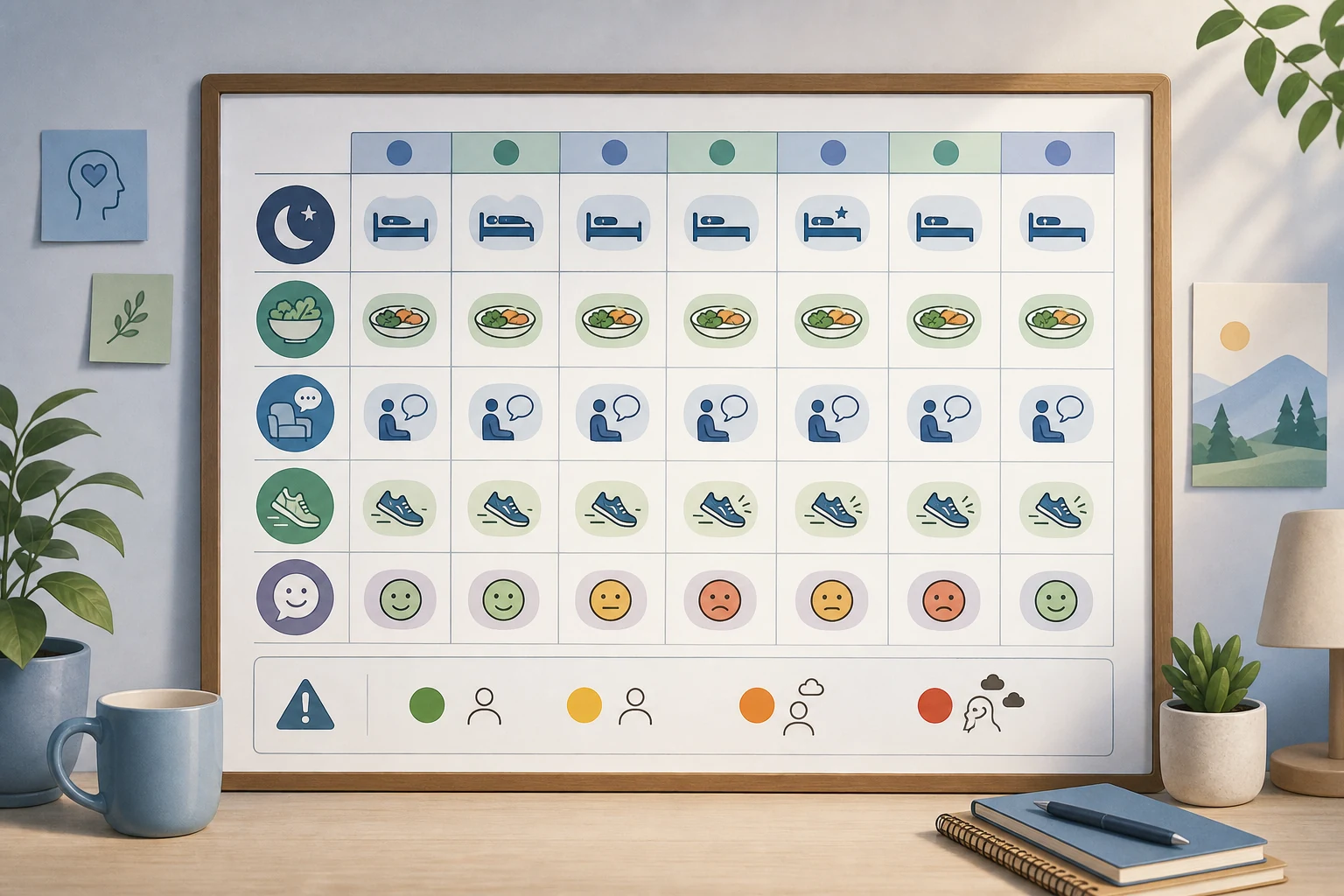
Sleep and routine work are especially important. Some therapists blend CBT with social rhythm strategies, because irregular sleep and daily disruption can make mood harder to manage. A simple routine worksheet may track bedtime, wake time, meals, activity, medication adherence if applicable, stress level, and mood rating. Over time, the pattern can be more useful than any single day.
CBT for Bipolar 1, Bipolar 2, and Bipolar II
People search for CBT for bipolar 1 and CBT for bipolar 2 because the lived challenges can feel different. Bipolar 1 involves a history of mania, which can bring higher safety risk and may require careful planning around sleep loss, impulsivity, psychosis, hospitalization history, or major life disruption. In that context, CBT may focus heavily on early warning signs, risk reduction, medication adherence, family communication, and post-episode repair.
Bipolar 2 involves hypomania and depression rather than full mania, but that does not make it easy or mild. Many people with bipolar 2 struggle with long depressive periods, shame about inconsistency, and difficulty recognizing hypomania because it may first feel productive or socially rewarding. CBT for bipolar II may spend more time on depressive thinking, activity pacing, identifying subtle elevation, and preventing overcommitment during higher-energy windows.
The therapy label may be the same, but the plan should be individualized. A good therapist will not treat "bipolar 1" or "bipolar 2" as a worksheet category only. They will ask about your episode history, medications, sleep, anxiety, substance use, trauma history, relationships, and what has happened when mood changed in the past.
CBT Worksheets, Manuals, PDFs, and Books: What to Look For
Searches for CBT for bipolar pdf, CBT worksheets for bipolar disorder, and CBT manual for bipolar disorder usually come from people who want something practical. That makes sense. A worksheet can turn a vague mood shift into a visible pattern. Still, a worksheet is safest when it supports care rather than replacing it.
Useful CBT worksheets for bipolar disorder often include mood and sleep tracking, thought records, activity scheduling, relapse prevention plans, medication adherence reflections, stress mapping, problem-solving steps, and early warning sign checklists. A strong worksheet should ask for context, not just symptoms. For example, "What changed in sleep, routine, stress, or conflict this week?" is usually more useful than "Were you happy or sad?"
When reviewing a CBT for bipolar disorder manual or book, look for balanced language. Good guides usually explain that CBT is collaborative, structured, and skill-based. They also acknowledge medication, crisis planning, family support, and professional care. Be cautious with any PDF, book, or worksheet that promises a quick fix, tells you to stop medication, frames bipolar disorder as only a mindset issue, or treats mania as a productivity hack.
Google Scholar and scholarly article searches can be helpful if you want to understand the evidence, but research papers can be dense. Look for review articles, meta-analyses, and clinical guideline discussions rather than relying on one small study. Also notice the population: some studies focus mostly on bipolar 1, some on bipolar depression, some on people currently stable, and some exclude higher-risk symptoms.

CBT vs DBT for Bipolar: Which Is Better?
CBT and DBT are often compared, but "better" depends on the problem you are trying to solve. CBT is usually centered on the relationship between thoughts, behaviors, emotions, and routines. It can be especially useful for depressive thinking, problem solving, activity planning, trigger awareness, and relapse prevention.
DBT, or dialectical behavior therapy, is often associated with mindfulness, distress tolerance, emotion regulation, and interpersonal effectiveness. Some people with bipolar disorder find DBT skills helpful when intense emotions, self-harm urges, relationship conflict, or impulsive reactions are part of the picture. DBT may also be useful when bipolar disorder overlaps with trauma, borderline personality traits, or chronic emotion dysregulation, though the right fit should be discussed with a qualified clinician.
Many care plans borrow from both. A person might use CBT thought records for depressive guilt, DBT distress tolerance for a crisis urge, and social rhythm strategies for sleep stability. The question is less "CBT or DBT for bipolar?" and more "Which skills match my current risks, symptoms, and goals?"

How to Find Cognitive Behavioral Therapy for Bipolar Disorder Near You
If you search for cognitive behavioral therapy for bipolar disorder near me, look beyond the title "CBT therapist." Ask whether the clinician has experience with bipolar disorder specifically. General CBT training is helpful, but bipolar care often requires comfort with mood episodes, medication coordination, safety planning, family involvement, and recognizing when symptoms need a higher level of care.
You can ask practical questions before starting: Have you worked with bipolar 1 or bipolar 2? How do you handle early warning signs of mania or hypomania? Do you coordinate with psychiatrists or primary care clinicians when needed? Do you use worksheets, mood charts, or relapse prevention plans? What happens if symptoms become urgent between sessions?
Cost and access matter too. Some people use insurance directories, community mental health centers, teletherapy platforms, university clinics, or referrals from a prescriber. If there is a waitlist, ask whether they can suggest interim support, group psychoeducation, or crisis contacts. If you feel at risk of harming yourself or someone else, or you feel unable to stay safe, seek urgent local help rather than waiting for a routine therapy appointment.
Using CBT Skills as a Next Step After Mood Reflection
CBT for bipolar disorder works best when it turns insight into a plan. A simple next step is to write down three columns: what I notice, what it might mean, and what I will do next. "Sleeping four hours and feeling unusually driven" might lead to contacting your clinician, lowering stimulation, postponing big commitments, and asking someone trusted to check in. "Feeling heavy and avoiding everyone" might lead to a small activity plan and a therapy discussion about depressive thoughts.
If you are still sorting out whether your mood swings fit a bipolar pattern, a bipolar screening guide can help you organize observations before seeking professional guidance. Use it as a reflection aid, not a final answer. The strongest plan is usually a connected one: your own notes, a trained clinician, supportive people, and practical skills you can repeat when mood starts to shift.

FAQ
Is CBT therapy good for bipolar disorder?
CBT can be helpful for many people with bipolar disorder, especially as part of a broader care plan. It may support mood awareness, depressive symptom management, sleep and stress routines, early warning sign planning, and treatment adherence. It is not usually considered a stand-alone treatment, and it is not the right tool by itself during acute mania, severe depression, psychosis, or unsafe situations.
Does CBT work for bipolar depression?
CBT is often used for bipolar depression because it can address negative thought patterns, withdrawal, low activity, guilt, and hopelessness. The goal is not to pretend everything is positive. The goal is to build more balanced thinking and small behaviors that support recovery while staying connected to professional care.
What is the 48 hour rule for bipolar people?
The "48 hour rule" is an informal decision-delay idea, not a universal clinical rule. It usually means waiting before making major decisions when mood feels unusually elevated, agitated, or impulsive. For example, a person might delay big purchases, relationship decisions, travel plans, or quitting a job until they have slept, checked in with someone trusted, and contacted a clinician if warning signs are present.
What not to say to someone with bipolar?
Avoid dismissive or blaming comments such as "everyone has mood swings," "you are just being dramatic," or "stop taking medication if you feel better." More helpful language is calm and specific: "I care about you," "I noticed sleep has been hard this week," or "Would it help to write down what support you want right now?"
Is bipolar 2 hard to live with?
Bipolar 2 can be very hard to live with, especially when depression is frequent or hypomania is subtle enough to miss until consequences appear. Many people also deal with shame, disrupted routines, and misunderstanding from others. Support can make a real difference: professional care, stable routines, mood tracking, therapy skills, and trusted relationships all matter.
Are CBT worksheets for bipolar disorder enough on their own?
Worksheets can help you track patterns and practice skills, but they are not enough for many people on their own. They are best used with a therapist, prescriber, or care team, especially if episodes are intense, safety is a concern, or medication decisions are involved.
How long does CBT for bipolar disorder take?
There is no single timeline. Some CBT programs are structured over several months, while others are adapted around current symptoms and long-term prevention. Progress may depend on episode history, current mood state, therapy goals, medication stability, and how often skills are practiced between sessions.