Why the MDQ Checks Symptoms Together
A bipolar screening result can feel confusing when you answered yes to a few questions but still are not sure what the score means. Many readers expect a questionnaire to simply count symptoms. The MDQ works differently. It tries to see whether several changes showed up as part of one pattern. It is not looking for unrelated moments spread across different seasons of life.
That distinction matters because a rough week, a night of very little sleep, a burst of confidence, or a short stretch of irritability can happen for many reasons. An online bipolar screener becomes more useful when it asks whether those changes clustered together and started affecting daily life in a noticeable way.
Disclaimer: This article is for educational purposes only and should not replace professional medical advice, diagnosis, or treatment. An online screening result is not a diagnosis.

Why Timing Matters More Than Symptom Count on a Bipolar Screener
What readers usually assume when they see yes-or-no symptom questions
Most people read a screening tool like a checklist. If they mark enough boxes, they assume the result must point strongly in one direction. If they mark only a few, they assume the result can be ignored. That is understandable, but it misses what bipolar screening is actually trying to capture.
The MDQ-style self-check is not only asking whether something has ever happened. It is also asking whether several changes belonged to the same stretch of time. That is different from asking whether you have ever been talkative once, slept less once, or spent too much money once.
Why a pattern matters more than one intense weekend
Bipolar symptoms are interpreted in the context of episodes. The National Institute of Mental Health says bipolar disorder involves clear shifts in mood, energy, activity levels, and concentration (NIMH bipolar disorder overview). It is not just one isolated feeling that appears without a broader change in functioning.
That is why the timing question matters. If several experiences arrived together, they may describe one meaningful change in state. If the same experiences happened separately over many months, they may reflect stress, sleep disruption, substance use, or another mental health concern. That is different from the episode pattern the questionnaire is screening for.
What the MDQ Is Trying to Detect in Bipolar Screening
Why isolated symptoms can point in different directions
A single symptom is rarely enough to tell a clear story. Talking faster than usual could happen during excitement, anxiety, caffeine overload, or a manic shift. Reduced sleep could come from deadlines, parenting, travel, or an elevated mood state. Irritability can show up during depression, burnout, trauma reactions, or everyday conflict.
The University of Illinois Chicago's MDQ form makes this logic explicit. After the symptom list, it asks whether several checked symptoms happened during the same period of time and whether they caused no, minor, moderate, or serious problems (UIC MDQ questionnaire PDF). In other words, the tool is looking for a cluster, not a scrapbook of unrelated experiences.
Why bipolar episodes are defined as stretches of change, not random bad days
This is also why people sometimes feel surprised by a low or unclear screening result. They may genuinely relate to some items, but not as one concentrated shift. A questionnaire can only do so much with scattered information.
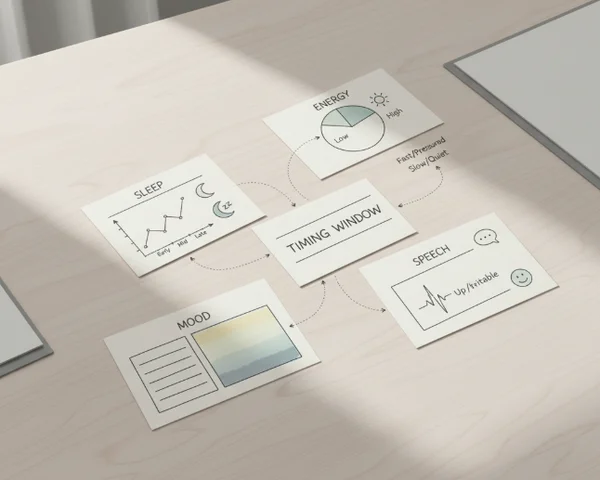
A mood pattern questionnaire is most helpful when readers answer with timing in mind. Think about whether the sleep change, racing thoughts, unusual confidence, extra energy, impulsive decisions, and irritability felt connected. The stronger that shared time window is, the more interpretable the screening result becomes.
Why Symptom Clusters Matter
Scattered stress vs one mood shift
Imagine one person who went through a breakup in January, had three nights of poor sleep during a work launch in March, and felt unusually social on vacation in June. Those experiences may all be real, but they do not automatically describe one bipolar-style episode.
Now imagine another person who, over the same four to seven days, slept very little, talked much more than usual, felt unusually powerful, started several risky plans, and became more irritable. That same stretch also created conflict at work and at home. This second pattern is closer to what a bipolar screening tool is trying to notice.
The original MDQ validation study used this type of logic. In that psychiatric outpatient sample, a positive screen required 7 or more symptoms, a yes to the same-period question, and moderate or serious problems. The study reported sensitivity of 0.73 and specificity of 0.90 for that approach (PubMed validation study). Those numbers do not mean the tool diagnoses anyone. They show that timing and impairment were built into the screen for a reason.
What the “serious problem” question adds to the result
The impairment question keeps the screener grounded in real life. A symptom list without impact can overstate what is happening. If a cluster of changes never affected judgment, work, sleep, finances, relationships, or safety, the interpretation may be different. It is not the same as a cluster that clearly disrupted daily living.
That is also why readers should slow down before labeling themselves based on one result. A screening tool can suggest that a pattern deserves attention. It cannot confirm bipolar disorder, rule out another condition, or explain every cause behind the pattern.
What to Do With an Online Bipolar Result
What details to notice before talking to a clinician
If an online result seems meaningful, the next useful step is not retaking the screen five more times. It is writing down the timing of the change. Note when the shift started, how long it lasted, and how sleep changed. Also note whether your energy or speech changed, whether spending or risk-taking changed, and what the effect was on work, school, family, or safety.
Those notes make it easier to talk to a mental health professional or other healthcare provider. They also help you separate a one-off stressful period from a repeating pattern. When people use a screener as a first step instead of a final answer, the result becomes much more practical.
When to seek professional or urgent help
Talk to a mental health professional if mood changes are recurring, causing conflict, damaging sleep, affecting finances, or making daily responsibilities harder to manage. Seek immediate help if symptoms are severe, if your behavior feels unsafe, or if you are thinking about harming yourself or someone else. NIMH directs people in the United States to call or text 988 for crisis support. It also advises calling 911 in life-threatening situations.
That help guidance matters because bipolar screening is meant to support earlier recognition, not replace care. Online tools can organize observations, but they are not built to handle emergencies or provide diagnosis by themselves.

What to Remember After an MDQ-Style Screening Result
The most important idea is simple: the MDQ checks whether several changes traveled together. That is why the questionnaire asks about the same period of time instead of treating every yes answer as equally meaningful on its own.
This makes the result more specific than a loose symptom list, but it still leaves room for uncertainty. A useful screen can tell you that a pattern deserves a closer look. It cannot tell you with certainty why the pattern happened.
If your result raises concern, use it as a structured starting point. Compare the score with your own timeline. Notice whether symptoms cluster into episodes, then bring that information into a professional conversation. That is the safest way to get value from an online bipolar screening tool.